Showing posts with label share market basics. Show all posts

How to Invest in Share Market?


The First Questions Comes to the mind of person How To invest in the share market when he prepares himself for stock trading. Basically you should have a clear vision  what type of returns you want . Here We are giving you simple guideline that will be helpful for you for the online trading:

What is  Demat Account and Why it necessary?

The Securities and Exchange Board of India (SEBI), has made it compulsory to open a demat account if you want to buy and sell shares in the Indian share market.

Share Market Basics - Part II


Financial Planning •

Comprehensive Financial Planning is a professional service for clients who need objective assistance in organizing their corporate or personal financial affairs to more readily achieve their goals. It is also a systematic approach whereby the financial planner helps the customer to maximize his existing financial resources by utilizing financial tools to achieve his financial goals. Even though one of the most significant factors in our life is the state of our personal finances, we rarely spend time on managing them since unlike business, we are not accountable to any one for our personal financial goals and results. 


Here are three basic questions that you will answer during financial planning:
* Where are you today? What is your current financial situation?
* Will you be able to get there? How do you plan to achieve your vision?
* Where do you want to get to? What is your vision of your future financial situation?


During the financial planning process you analyze what is your financial needs and goals are. In other words, financial planning is the process of meeting your life goals through proper management of your finances. Life goals can include buying a home, saving for your children’s education or planning for your retirement. It is a process that consists of specific steps that help you to take a big-picture look at where you are financially. Using these steps you can work out where you are now, what you may need in the future and what you must do to reach your goals. We can make a much larger contribution in every area of our life when our personal finances, investments and taxation are properly planned up. 

Financial planning is simple mathematics. There are 3 major components :
* Financial Resources (FR)
* Financial Tools (FT)
* Financial Goals (FG)


When you want to maximize your existing financial resources by using various financial tools to achieve your financial goal, is financial planning.

The Financial Planning process aims to establish a comprehensive plan to meet the client’s objectives. These steps are:
o Gathering data
o Establishing the client’s objectives, goals and aims
o Recommending a plan of action
o Processing and analyzing information
o Implementing the plan when agreed and also reviewing the plan regularly


Financial plans must be dynamic to reflect the changing socio-economic environment, as well as the stage of life that you are in. Yet, very few of us bother to review our financial situation as we move from one stage of life to another. A financial planner, is someone who uses the financial planning process to help you figure out how to meet your life goals. The planner can take a `big picture` view of your financial situation and make financial planning recommendations that are right for you. The planner can look at all of your needs including budgeting and saving, taxes, investments, insurance and retirement planning. he best time to review your financial situation is today! And you must do this as regularly as you can because your life is never static.

Unless you start early, you might find that time has passed you by. You will get older, your children will have growing needs, your expenses will rise…..and, before you know it, you may be regretting but not planning the future. So go ahead, and plan your future now.

Volatility in Share Market •

Volatility in the stock market refers to changes in market value of stocks, more drastic the price change, more is said to be the volatility.

Securities •

Bonds and Stocks are generally called securities.

Risk Management •

Risk Management is a important term in stock market investing that has to be taken care of. It refers to the actions which are taken to prevent and protect against huge monetary losses in investments in the share market.

Real Estate •

Real Estates refer to land and other stuctures on it along with its rights and privileges like mineral rights or cultivation rights.

Principal •

The initial investment in a company excluding all interests or dividends, if any.

Portfolio •

A collection of all the stocks, bonds and cash held by an individual, a group or an institution.

Open-End Fund •

An open ended fund is a mutual fund which can be bought and sold at anytime after its been on the market without any limitations.

Maturity •

Maturity is the date on which a bond, an investment contract or a loan matures and is due to renewal or repayment.

Share Market Basics - Part I


In order to know what stock is and the basic meaning of stock market first we have to dive into the history of stock market specifically , the history of what has come to be known as the corporation. Corporations in one form or another have been around ever since one guy convinced a few others to pool their resources for mutual benefit. In order for a corporation to do business, it needs to get some money from somewhere. A stock is a piece of ownership of a company. When a Company needs some money, which is helpful in growing business, they acquire extra money by selling ownership in small percentages in form of stocks. The word stock trading is commonly used to describe both the physical location for buying and selling (trading) stocks as well as the overall activity of the market. 


The strategies you need to know to maximize your wealth and the pitfalls you need to avoid are not beyond comprehension. Even if you feel that you don’t have the time, and prefer to entrust your money to a portfolio manager or mutual fund, the least you need to know is which funds are better, how to choose your fund manager, and keep a tab on its performance. There are two analytical ways in investing in stock market, technical and fundamental analysis


Technical analysis is based on prices and volume. Technical investors believe price and volume interpret every thing in the market. They study charts for forecasting of future stock price or financial price movements. For learning technical analysis academic knowledge isn’t required, with every level you can learn it.

Fundamental analysis is a stock valuation method that uses financial and economic analysis to predict the movement of stock prices.

The newbie investor is advised to investigate some of these basic strategies and see for himself how they perform. Stock trading closely follows the economy of a country. When the economy is doing well, the market is bullish. Before investing in the stock market you must choose a stock broker. A stock broker is who performs the various transactions in financial instruments on a stock market as an agent of their clients. There are basically two ways to trade the stock market- using effective stock trading strategies or shooting in the barrel. There are numerous stock trading strategies. Of all of these, there are a couple of tried and trued methods that have worked well for investors over many years.

So many people invest in these stock markets but only few percent of them can only make money. They make common mistakes and you should avoid them by high level of understanding by the information given.

Things to know about stock markets


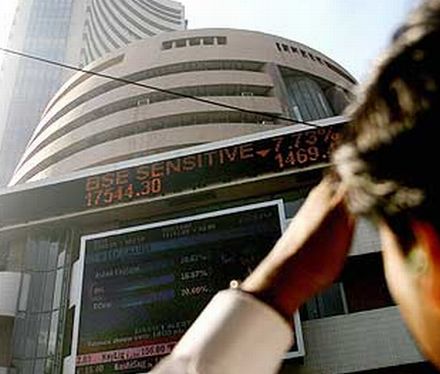
“Stock market” is a term used to describe the physical location where the buying and selling of stocks take place as well as the overall activity of the market within a particular country. The correct term to be used in pertaining to the physical location for trading stocks is “stock exchange.” Every country may have a couple of different stock exchanges that are usually traded on only one exchange although a lot of large corporations may be listed in several different locations.


The ubiquity of stock exchanges makes it possible to buy or sell stocks throughout the world. The only restriction to stock exchanges is time. Different exchanges may have differing opening hours based on their local times. The major stock exchanges in the world are the Tokyo Stock Exchange of Japan, the Bombay Stock Exchange of India, the London Stock Exchange of United Kingdom, the Frankfurt Stock Exchange of Germany, the SWX Swiss Exchange of Switzerland, the Shanghai Stock Exchange of China, and the New York Stock Exchange, the NASDAQ, and the AMEX of United States.


The economic health of a country is closely followed by stock markets. Bull markets occur when a particular nation experiences high economic production, low unemployment level, and low inflation rates. Bear markets, on the other hand, follow the down trends in the economy. Such indicators of economic downfall are increased unemployment and inflation. These causes the fall of stock prices.

Supply and demand, which are determined to a large extend by investor psychology, also influence the fluctuations in the prices of stocks. A rise in stocks may cause a lot of investors to jump into the bandwagon which later drives the price even faster. A falling price, on the other hand, can drive the same effect called short term fluctuations. After such runs, stock prices tend to normalize.


Aside from the stock exchange, other popular markets that offer many investment opportunities include the Foreign Exchange Market (FOREX), the Futures Market, and the Options Market. The FOREX is the biggest investment market in the world, in terms of trades and values. The traders in a FOREX buy one currency against another and profit from small changes in the value. Most FOREX trades are entered and exited in a 24-hour span so traders have to keep a close watch on the market in order to make profitable trades.

The futures market is a market of contracts where goods are bought and sold at specified prices and times. The desire of most buyers and sellers to lock in the prices of their goods for a future delivery despite the market conditions resulted to the existence of the futures market. The market conditions can make the actual futures contract to fluctuate considerably in value. Most of the investors in the futures market are mainly interested in the profit that can be realized in trading contracts and not in the actual goods.


Another alternative market is the options market. The options market is quite similar to the futures market because it also features a contract that gives the right, and not the obligation, to trade a stock at a certain price before the specified date. These can be traded on their own or purchased as an insurance against price fluctuations within a specified time frame.

The FOREX, the futures market, and the options market are all quite risky markets that require a considerable knowledge and experience to prevent any substantial loss. These also require a very close attention to the different market movements. As compared to the three, stocks are considered to be less risky because the movements of the market are usually gradual and although short term investment strategies are possible, a lot of people view stocks as long term investments.